Suffolk County Court is an important part of the judicial system in Suffolk County, handling a wide range of legal matters, from criminal cases to civil disputes. The court ensures that justice is delivered fairly and efficiently, maintaining transparency in every process. Visitors can use the court to check hearing schedules, access case information, and understand filing procedures. Whether you are a resident or an attorney, the Suffolk County Court provides guidance to navigate legal matters smoothly. Its services help reduce confusion and save time for anyone involved in a case.
The Suffolk County Court also offers online and in-person resources for accessing court records and managing legal tasks. Residents and legal professionals can learn about procedures, important deadlines, and available court services. By presenting key details about court operations, Suffolk County Court makes the legal system more understandable and user-friendly. This resource helps users know what actions they can take and how to prepare for hearings effectively. It is designed to make justice accessible for everyone in the community.
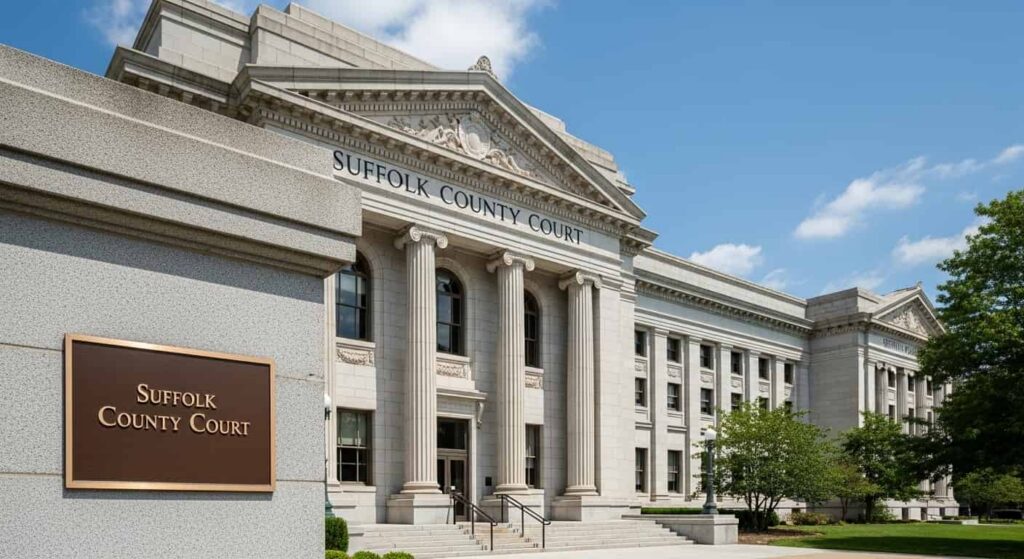
What is the Suffolk County Court System
The Suffolk County Court is a central part of New York’s judicial system, serving residents across the county. It ensures justice is delivered fairly while upholding state laws. The court handles both criminal and civil matters, providing a trusted venue for legal resolution. Residents, attorneys, and individuals involved in cases rely on the court for accurate information and efficient case processing. The Suffolk County Court plays a vital role in maintaining public trust and supporting the county’s legal framework.
Key responsibilities include:
- Handling criminal cases beyond the scope of local courts.
- Adjudicating civil disputes with larger claims.
- Supporting enforcement of New York state laws.
Jurisdiction of Suffolk County Courts
Suffolk County Courts have authority over legal matters within the county’s geographic boundaries. This includes towns, villages, and all local jurisdictions in Suffolk County. The court manages significant cases that lower courts cannot handle, ensuring that justice is accessible to residents throughout the region. Its jurisdiction also allows for special proceedings in family and probate matters when required. By clearly defining its authority, the court maintains efficiency and accountability in handling legal matters.
Key points of jurisdiction:
- Geographic coverage: Covers all towns and villages in Suffolk County.
- Case authority: Criminal felonies, civil cases exceeding certain limits, and appeals from lower courts.
- Special proceedings: Family, probate, and other special cases.
How the Court System Works
The Suffolk County Court works in coordination with other courts across New York to ensure smooth legal processes. Cases typically start with filing, followed by hearings, and may end in trial or settlement. Judges manage both civil and criminal matters, maintaining a consistent workflow. The court also communicates closely with town and district courts, as well as the state appellate system, to provide seamless case progression. These relationships help avoid delays and ensure that cases are resolved fairly.
How the court operates:
- Structure: Managed by appointed judges for civil and criminal matters.
- Case flow: Filing → Hearings → Trial or Settlement.
- Court relationships: Coordination with town courts, district courts, and appellate courts.
How to Access Court Records Online
Access to public court records allows users to check case status, confirm filings, and review decisions without visiting the courthouse. Through the official New York eCourts portal (https://iapps.courts.state.ny.us/webcivil/ecourtsMain), individuals can search civil case information quickly and securely. Online tools reduce wait times and make it easier for residents, attorneys, and researchers to locate court data. Using trusted government portals ensures the information is accurate and updated.
Online access provides basic case tracking details rather than full confidential files. Users can explore available records, confirm court schedules, and verify case progress from any device with internet access. While not every document appears online, the portal serves as a reliable starting point before requesting additional details in person. Understanding how to use the search tool correctly helps avoid confusion and saves time.
Types of Records Available
The portal generally displays summary-level information about civil cases. The exact data depends on court type and case status.
- Case index or docket number
- Party names involved in the case
- Filing dates and case status
- Scheduled appearances or hearing dates
- Court location information
Public vs. Restricted Records
Not all court records are accessible online. Access rules protect privacy and sensitive legal matters.
- Public Records: Civil case listings, status updates, and general schedules
- Restricted Records: Sealed cases, juvenile matters, or sensitive family information
- Limited Display: Some data appears only as summaries instead of full documents
Official Online Portal
Using the official New York eCourts portal helps users access court records online quickly and securely without visiting the courthouse. This guide explains how to navigate the system, enter search details, and review results with confidence. By following these steps, residents, attorneys, and researchers can locate case information such as party names, status updates, and hearing schedules. The online portal simplifies the process of tracking cases while saving time and reducing confusion. Understanding how to search properly ensures accurate results and better use of available court record tools.
Go to: https://iapps.courts.state.ny.us/webcivil/ecourtsMain
Choose Search Type
Select the appropriate search tool (example):
- WebCivil Local
- Supreme Court Civil
- Other available options
Enter Search Information
Provide details such as:
- Party Name (person or business)
- Case Index Number (if known)
- Court selection filter
- Filing year or case status (optional)
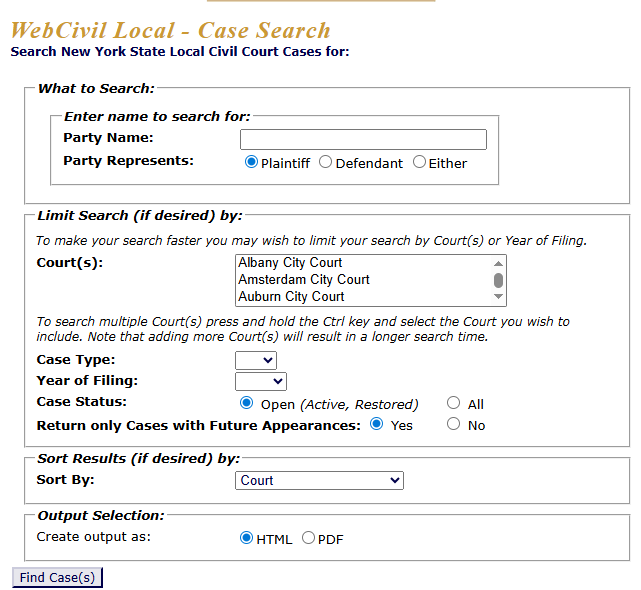
Apply Filters (Optional)
Narrow results using:
- Court location selection
- Case type
- Open/closed status
- Future appearance settings
Run Search
Click:
Find Case(s)
The system will display matching records.
Review Results
You can view:
- Case summary
- Court name
- Appearance dates
- Basic status updates
In-Person Access
Courthouses still provide public terminals or clerk assistance for record searches. Staff can guide users on forms or document requests. Fees may apply for certified copies. Combining online search with in-person visits ensures the most complete access to public court records.
Types of Courts in Suffolk County
Suffolk County courts consist of multiple divisions designed to handle different legal matters efficiently. Understanding which court has jurisdiction over your issue helps save time and prevents filing errors. Each court specializes in certain case types, from civil disputes to criminal proceedings and family law matters. Together, they form a structured system that ensures justice is delivered fairly. The following overview explains the primary courts serving Suffolk County and their responsibilities.
Supreme Court
The Supreme Court in Suffolk County functions as the highest trial-level court for significant legal matters. It handles complex civil disputes and serious criminal cases that exceed the jurisdiction of lower courts. Individuals or organizations involved in large financial or property conflicts often appear here. The court’s broad authority allows it to manage extensive litigation and detailed legal reviews. Understanding its role helps users determine whether their case requires higher-level judicial attention.
Key matters handled include:
- Major civil lawsuits
- Large financial or property disputes
- Complex legal claims
- Serious criminal proceedings
District Court
District Courts address local trial matters and provide a practical venue for everyday legal disputes. They typically manage less complex cases and offer faster resolution compared to higher courts. Residents frequently use District Courts for community-level legal concerns that require formal adjudication. These courts support accessibility and efficiency within the local justice system. Their processes are generally straightforward, making them suitable for routine legal issues.
Common cases include:
- Misdemeanor offenses
- Small civil claims
- Traffic violations
- Local ordinance matters
Family Court
Family Court specializes in matters involving family relationships and child welfare. It focuses on ensuring fair decisions while protecting the interests of minors. Families rely on this court to resolve sensitive issues that require careful legal handling. Its structure allows judges to address emotional and social aspects alongside legal considerations. Understanding its jurisdiction helps families approach the correct venue for resolution.
Cases often handled:
- Child custody arrangements
- Child support orders
- Adoption proceedings
- Juvenile-related concerns
Surrogate’s Court
Surrogate’s Court oversees legal processes related to estates and inheritance matters. It becomes involved after an individual’s death to ensure assets are distributed according to law. The court validates wills and supervises estate administration procedures. Individuals dealing with probate or inheritance issues frequently interact with this court. Its role ensures financial and property transitions occur legally and transparently.
Responsibilities include:
- Probate of wills
- Estate administration
- Asset distribution
- Guardianship matters
Criminal Court
Criminal Court manages proceedings involving violations of criminal law. It ensures that prosecutions follow proper legal procedures while safeguarding the rights of defendants and victims. Cases range from minor offenses to serious allegations requiring formal adjudication. This court contributes to maintaining public safety through structured legal enforcement. Understanding its function helps individuals navigate criminal proceedings effectively.
Typical case types:
- Minor criminal offenses
- Serious criminal charges
- Arraignments and hearings
- Legal prosecution processes
Civil Court
Civil Court handles disputes between individuals or organizations that do not involve criminal charges. It provides structured procedures for resolving conflicts related to money, property, or agreements. Many lawsuits begin here when parties seek compensation or legal clarification. The court promotes fairness in non-criminal disagreements through impartial rulings. Knowing its jurisdiction helps users file claims appropriately.
Common disputes include:
- Contract disagreements
- Property claims
- Financial compensation lawsuits
- Business-related conflicts
Traffic Court
Traffic Court focuses specifically on violations involving driving and road regulations. It offers a streamlined process for resolving transportation-related legal issues. Drivers interact with this court for citations or infractions that do not require higher-level judicial review. Efficient handling of these cases helps maintain order and safety on public roads. Its specialized nature keeps minor violations from burdening other courts.
Typical matters include:
- Speeding tickets
- Parking violations
- License-related infractions
- Road safety offenses
Judges and Court Officials in Suffolk County
Suffolk County court judges and officials play a vital role in maintaining fairness, transparency, and efficiency in legal proceedings. They ensure that cases follow proper legal standards and courtroom rules. From managing hearings to issuing rulings, their work supports the integrity of the judicial system. Understanding their responsibilities helps residents and legal participants navigate court processes with confidence. The following sections explain the duties of judges and how they are assigned to cases.
Role of Judges
Judges are responsible for guiding courtroom proceedings and ensuring all parties are treated fairly. They interpret laws, evaluate evidence, and make legally binding decisions. Their presence helps maintain order and professionalism during hearings and trials. Judges must remain neutral while applying legal principles accurately. By performing these duties, they strengthen public trust in the justice system.
Key responsibilities include:
- Presiding over hearings and trials
- Reviewing evidence and legal arguments
- Making rulings based on law and facts
- Ensuring fair treatment of all parties
- Managing courtroom procedures efficiently
How Judges Are Assigned
Judicial assignments depend on court policies, case types, and administrative procedures. Courts aim to distribute cases fairly while considering specialization and workload. Assignments help ensure efficiency and avoid delays in proceedings. Administrative staff coordinate scheduling to balance court operations. Understanding this process provides insight into how cases reach specific judges.
Assignment factors often include:
- Appointment or election depending on court level
- Case allocation based on availability
- Matching specialization to case type
- Administrative workload balancing
Appeals Process in Suffolk County Court
The appeals process in Suffolk County Court gives parties an opportunity to challenge a court decision after the case has been finalized. This process is not meant to retry the case or introduce new evidence. Instead, it focuses on reviewing whether the law was applied correctly and whether proper legal procedures were followed. Appeals provide an important safeguard to ensure fairness and consistency within the judicial system.
When Appeals Apply
Appeals usually apply after a final judgment or order has been issued by the court. A party may consider filing an appeal if they believe a legal or procedural error affected the outcome of the case. It is important to understand that disagreements with the judge’s decision alone are not enough; there must be a valid legal basis for the appeal.
Common reasons for filing an appeal include:
- Errors of law, where statutes or legal rules may have been misinterpreted or incorrectly applied
- Procedural mistakes, such as failure to follow required court processes
- Questions of fairness, including claims of bias or improper handling of evidence
Where Appeals Go
Suffolk County cases follow a structured appellate path within the New York State court system. The court that hears the appeal depends on the type of case and the court where it was originally decided. This structure helps maintain consistency in how laws are interpreted across the state.
In general:
- Decisions from lower or local courts are reviewed by higher state-level courts
- Some appeals may be heard by intermediate appellate courts
- In limited situations, cases may reach the state’s highest court
Each appellate court reviews the record to determine whether legal errors were significant enough to change or reverse the original decision. This layered system helps protect the integrity of court rulings while ensuring accountability.about the options available after a court decision.
Court Services Available in Suffolk County
Suffolk County courts offer a range of services designed to support residents, legal professionals, and visitors throughout the legal process. These services help users access court information, track case progress, and understand court procedures more easily. By providing both online and in-person resources, the court system aims to reduce confusion and save time. Whether someone is involved in a case or simply seeking information, these services improve transparency and accessibility. Understanding available services helps users interact with the court system more confidently.
Case Lookup Overview
The case lookup service allows users to search for details about both active and closed court cases in Suffolk County. This service provides insight into case progress and helps users stay informed about important updates. It is designed to support transparency by offering access to official court data. Residents and legal professionals can rely on this tool to check case status without visiting the courthouse. Using case lookup helps users plan ahead and manage legal responsibilities efficiently.
With the case lookup service, users can typically find:
- Case status: Whether a case is open, closed, or pending
- Court dockets: Upcoming hearings, motions, or trial dates
- Party information: Names of plaintiffs, defendants, attorneys, and judges
- Filing history: Records of motions and documents filed in the case
Filing Documents with the Court
Filing documents with the court is a critical part of any legal process. Court filings officially record requests, responses, and actions taken in a case. Accurate and timely submission helps ensure that a case moves forward without unnecessary delays. Understanding filing methods and requirements can reduce errors and missed deadlines. Proper court filings also support transparency and organization within the judicial system.
Paper vs. Electronic Court Filings
Courts may accept filings either on paper or through electronic systems, depending on court rules and case type. Paper filings are usually submitted in person at the clerk’s office and may require multiple copies. Electronic court filings, commonly known as e-filing, allow users to submit documents online through approved portals. E-filing often provides faster confirmation and improved tracking of submissions. Checking court rules early helps determine which filing method is required.
Key differences include:
- Paper filings: Printed documents, in-person submission, possible wait times
- Electronic filings: Online submission, quicker confirmation, digital records
- Court rules: Some cases may require mandatory e-filing
Where Court Filings Are Handled
Court filings are processed by the court clerk’s office, which manages official case records. Clerks review submissions to ensure they meet formatting and procedural requirements. Documents with missing information or incorrect formatting may be rejected. Knowing the correct court location and clerk’s office is important for successful filing. Proper communication with the clerk’s office helps avoid filing errors.
The clerk’s office typically:
- Receives and records filed documents
- Reviews filings for completeness
- Updates official case records
- Provides filing confirmations
General Filing Requirements
Most courts follow standard filing requirements to maintain consistency and clarity. Documents must be clearly formatted, properly labeled, and submitted on time. Filing deadlines are strictly enforced, so late submissions can impact a case. Ensuring accuracy before filing helps prevent rejections or delays. This information is general in nature and does not replace legal advice.
Common requirements include:
- Correct case number and court name
- Proper signatures and dates
- Clear, readable formatting
- Payment of required filing fees
- Submission before stated deadlines
Locations and Office Information
Clear access to court locations helps visitors plan their visits with confidence and avoid unnecessary delays. Suffolk County Court provides reliable location and office details for residents, attorneys, and visitors. Accurate information allows users to reach the correct office and prepare in advance. Each courthouse follows standard public access procedures and security protocols. Knowing where to go and whom to contact supports smoother court visits.
Suffolk County Court (Main Court)
The Suffolk County Court (Main Court) is located at the Arthur M. Cromarty Court Complex in Riverhead, New York. This courthouse serves as the primary location for county-level civil and criminal cases. It houses multiple courtrooms and administrative offices to support daily court operations. Clear signage and staffed service counters help visitors find the correct department. Security screening is required for all entrants, so arriving early is recommended.
Court details include:
- Location: Arthur M. Cromarty Court Complex, 210 Center Drive, Riverhead, NY 11901
- Office hours: Monday–Friday, 9:00 AM–5:00 PM (closed weekends and court holidays)
- Chief Clerk’s Office: 631-852-2120
- County Court Information: 631-852-1462
- County Clerk (Court Records): 631-852-2000
Frequently Asked Questions
Clear and reliable court information helps people feel more confident when dealing with legal matters. This Frequently Asked Questions section explains common court-related concerns in simple language. Each answer provides practical guidance and clear direction. Whether you are attending court, checking records, or handling a ticket, these details can help reduce uncertainty. For case-specific help, court clerks and official notices remain the best source.
Which court handles my case?
The court that handles your case depends on the type of legal issue and where it occurred. Traffic violations are usually handled by traffic or local courts listed directly on the ticket. Civil cases may go to county or district courts depending on the claim amount and subject matter. Criminal cases often begin in a local or county-level trial court. Your summons, citation, or filing paperwork will clearly list the assigned court. If the information is unclear, contacting the court clerk can help confirm the correct court quickly.
How do I find my court date?
Court dates are commonly printed on tickets, summonses, or official notices mailed by the court. Many courts also provide online case search tools where dates appear after entering a case number or party name. Some cases may have multiple dates, including hearings and trials. If you recently filed paperwork, dates may take time to appear online. Calling the clerk’s office can help confirm the most current court date, time, and courtroom location.
Are court records public?
Most court records are available to the public and can be viewed without special permission. These records often include case filings, court dates, motions, and final judgments. However, certain cases remain restricted to protect privacy or safety, such as juvenile matters, sealed cases, or sensitive family proceedings. Online portals usually display only public records. For full access or certified copies, visitors may need to request records in person through the court clerk or records office.
Where do I pay a traffic ticket?
Traffic ticket payments are handled by the court listed on the citation, not by the police department. Many courts offer online payment options through secure portals for convenience. Some courts also accept payments by mail or in person at the clerk’s office. Payment instructions and deadlines are printed on the ticket and should be reviewed carefully. Missing a payment deadline can result in additional fines or court action, so timely payment is important.
What happens if I miss a court date?
Missing a court date can lead to serious consequences, depending on the case type. The court may issue additional fines, suspend driving privileges, or issue a warrant. Courts generally expect attendance unless a valid reason is approved in advance. If you miss a date, contact the court immediately to explain the situation. The clerk can guide you on next steps, such as requesting a new date or submitting required paperwork.
Need more court information?
Reliable court information helps prevent mistakes and unnecessary stress. Official court websites, clerk offices, and mailed notices provide the most accurate updates. Keeping copies of all paperwork and tracking important dates is highly recommended. Checking case details regularly helps avoid missed deadlines. Clear preparation and early confirmation make court processes easier to manage.